#
Sunday, March 31, 2013
One week on and half way there
More than half, in fact. We're now at 1116. Might it be possible to reach 2000 by the end of this week? I've had a few promises, and there are several people I haven't yet contacted. The chances may be good.

Thursday, March 28, 2013
Catching up and firing up
Fundraising has resulted in reigniting old friendships. I've been in touch with people I haven't heard from in years and feel touched by their generosity, especially after all this time.
It seems my example may have also stirred passions and interests. No results to point to yet, but perhaps a couple have been inspired to offer their own service.
Another $200 in my second day. Rolling, rolling, rolling ...
#
Wednesday, March 27, 2013
A quarter of the goal in one day!

#
Tuesday, March 26, 2013
Let the fundraising begin
As part of my work with the Kalinga Eye Hospital, I am required to raise money for surgeries. These are simple surgeries, such as for cataract, that cost little, but are unaffordable for the rural poor.
On the one hand I feel uncomfortable asking friends for money. Within my cultural background, it's not something done except in extreme emergencies.
On the other hand, there are good reasons - in this context - for doing so. It provides an opportunity for volunteers to spread the word and educate their network of friends and family about not only the work of the NGO, but the very real pressing conditions of life for so very many people in the world.
It also provides an opportunity for donors to practice giving. In my experience with other fundraising efforts, many people are eager to help. They just haven't found a way. Sometimes simply asking results in a wave of generosity that could not be foreseen.
I have some friends and family I simply can't ask because their situation is somewhat financially tenuous. On the other hand, most of my friends are comparatively well-off, with insurance plans that cover medical expenses. I had hernia surgery here last year and it cost me $12. That was my copay for visiting the doctor. The insurance took care of everything else. I consider myself extremely fortunate in this respect. Imagine not being able to afford even a $50 surgery for something as important as being able to see.
If I come knocking, I hope you will be able to help. If you cannot, don't worry. More opportunities to help will present themselves.
On the one hand I feel uncomfortable asking friends for money. Within my cultural background, it's not something done except in extreme emergencies.
On the other hand, there are good reasons - in this context - for doing so. It provides an opportunity for volunteers to spread the word and educate their network of friends and family about not only the work of the NGO, but the very real pressing conditions of life for so very many people in the world.
It also provides an opportunity for donors to practice giving. In my experience with other fundraising efforts, many people are eager to help. They just haven't found a way. Sometimes simply asking results in a wave of generosity that could not be foreseen.
I have some friends and family I simply can't ask because their situation is somewhat financially tenuous. On the other hand, most of my friends are comparatively well-off, with insurance plans that cover medical expenses. I had hernia surgery here last year and it cost me $12. That was my copay for visiting the doctor. The insurance took care of everything else. I consider myself extremely fortunate in this respect. Imagine not being able to afford even a $50 surgery for something as important as being able to see.
If I come knocking, I hope you will be able to help. If you cannot, don't worry. More opportunities to help will present themselves.
#
Monday, March 25, 2013
Getting to Bhubaneswar
There are no direct flights from Dubai to the capital of Odisha, so I'll have to start searching for a flight to a major city with connecting flights.
Searching [flight to Bhubaneswar] , Google offers the following:
To Kolkata
Emirates: DXB 2:05 AM => CCU 8:15 AM Nonstop 4h 40m
Jet Konnect: CCU 10:00 → BBI 11:25 Nonstop 1h 25m
IndiGo: CCU 12:15 → BBI 13:15 Nonstop 1h 00m
To Mumbai
Searching [flight to Bhubaneswar] , Google offers the following:
Flights to Bhubaneshwar, India (BBI)
 |
| ||||||||||||||||||||||||||||
To Kolkata
Emirates: DXB 2:05 AM => CCU 8:15 AM Nonstop 4h 40m
Jet Konnect: CCU 10:00 → BBI 11:25 Nonstop 1h 25m
IndiGo: CCU 12:15 → BBI 13:15 Nonstop 1h 00m
To Mumbai
Air India: DXB 6:20p → BOM 10:45p Nonstop 2h 55m
Air India: DXB 11:40p → BOM 04:05p Nonstop 2h 55m
Jet Airways: Dubai
(DXB) 03:20pm →Mumbai (BOM) 07:55pm Nonstop 3h 05m
Jet Airways: Dubai (DXB) 06:45pm →Mumbai (BOM) 11:20pm Nonstop 3h 05m
Jet Airways: Dubai (DXB) 09:40pm →Mumbai (BOM) 02:15pm Nonstop 3h 05m
Emirates: Dubai (DXB) 04:10pm →Mumbai (BOM) 08:35pm Nonstop 2h 55m
Emirates: Dubai (DXB) 06:45pm →Mumbai (BOM) 11:20pm Nonstop 3h 05m
Emirates: Dubai (DXB) 10:30pm →Mumbai (BOM) 02:55pm Nonstop 2h 55m
Looks like Mumbai is the way to go!
Visa, please

The Indian government outsources visa applications to a company that has set up an online form creation process. It works, but only after several attempts. The form will kick you out after a certain period of time (which saves some of the work, but not all), and if you don't upload a photo you can't save the text data on that particular page. Unite sent me a sheaf of documents via PDF that will have to be attached to my application, which I will have to now take to an office in Bur Dubai. Hopefully, I won't have to make more than one trip, but I'm prepared to make more. That's just the way things happen here.
Saturday, March 23, 2013
Yeah, but REALLY, what are you going to do there?
Looks like they do great work. Are you only doing
photography?
I guess I'll find out when I get there. I could end up writing grants, editing English documents, or even teaching
English.
#
Friday, March 22, 2013
Yeah, but what are you going to do there?
You are going to take photos. Is that it? It didn't seem
clear about what happens to the photos afterward. Also, you implied that you
need to pay them to volunteer there---- I didn't understand that either.
I'm not entirely sure yet what my photo project will
entail. It may be the hospital is
running a project that requires photography - cases studies, surgical
procedures, new website photos. If they
have nothing particular in mind, then I will need to develop something of my
own. I'm thinking of ideas now so that I
have a few options when I arrive, but I'll have to be flexible and see what
kind of opportunities present.
I do have to raise money as part of this project, but every
last cent goes to funding surgeries.
Part of my job there will be observing and certifying operations.
#
Thursday, March 21, 2013


About Odisha
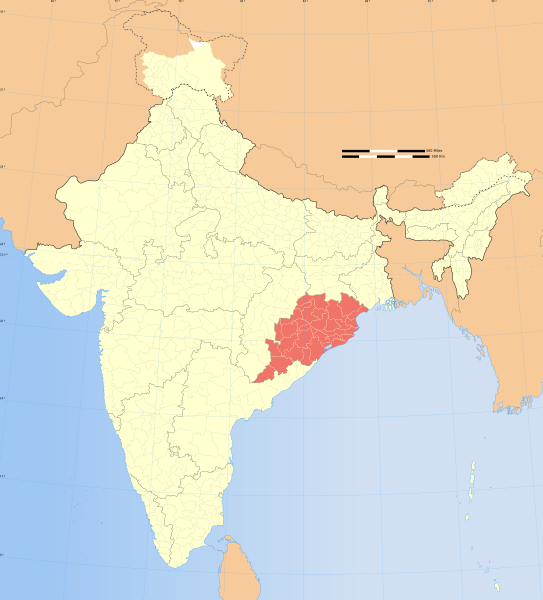
Odisha is the 9th largest state by area in India, and the
11th largest by population. Odisha has a relatively long, unindented coastline
(approximately 480km), but until recently lacked adequate ports. The narrow, level coastal strip, including
the Mahanadi river delta, supports the bulk of the population, which still
relies on agriculture as its primary means of livelihood.
According to the 2011 census of India, the total population
of Odisha is 41 million, 90% of whom are practicing Hindus. The literacy rate
is 73% (82% of males and 64% of females) and the proportion of people living
below the poverty line in 1999–2000 was 47.15%, nearly double the all-India
average of 26.10%.
Adapted from Wikipedia
Wednesday, March 20, 2013
Serving Odisha
This summer I will be serving as a volunteer photographer documenting the work at the Kalinga Eye Hospital in Odisha, India.
Why photography?
Since last spring I have been studying photography through the Open College of the Arts. I am nearly finished with my first course, feeling a bit more confident about my skills, and was looking for some opportunity this summer to further my practice. Through previous internet searches I was aware of volunteer opportunities for photographers and so started casting about for something that might fit my needs, my schedule, and my interests.
Why Unite for Sight?
 I found several interesting journalism opportunities in places such as Sri Lanka and Mongolia, but they required serious fees of several thousands of dollars, much of which seemed to be going to the referral agent. While Unite for Sight also requires a substantial investment, all funds go directly to hospitals to support eye surgery. This seems like a much better investment of financial resources. In addition, Unite for Sight seems to have a rigorous system in place for screening and training volunteers. It's not just a matter of having money and time, but having skills, being committed, and being willing to undergo training (about which I'll write more later).
Why Odisha?
Unite for Sight supports hospitals in Honduras, Ghana, and India. As you probably know, I have a special interest in India and have traveled there often in recent years. It's a huge country and there are many parts I haven't yet visited, including Odisha. The area also has a small number of Buddhist archaeological sites that I would like to explore after finishing my work with the hospital.
Why photography?
Since last spring I have been studying photography through the Open College of the Arts. I am nearly finished with my first course, feeling a bit more confident about my skills, and was looking for some opportunity this summer to further my practice. Through previous internet searches I was aware of volunteer opportunities for photographers and so started casting about for something that might fit my needs, my schedule, and my interests.
Why Unite for Sight?

Why Odisha?
Unite for Sight supports hospitals in Honduras, Ghana, and India. As you probably know, I have a special interest in India and have traveled there often in recent years. It's a huge country and there are many parts I haven't yet visited, including Odisha. The area also has a small number of Buddhist archaeological sites that I would like to explore after finishing my work with the hospital.
#
Subscribe to:
Comments (Atom)